A few years ago, at an art fair in Moscow, his eye caught on a piece: “Master Plan of Rome in the Age of Augustus.” Precise lines, austere minimalism, architectural rigor, handwritten Italian notes. He bought it instantly — it was aesthetic, a reminder of Italy, and a statement piece for his office overlooking Moscow City. “Intellectual. My style,” he thought.
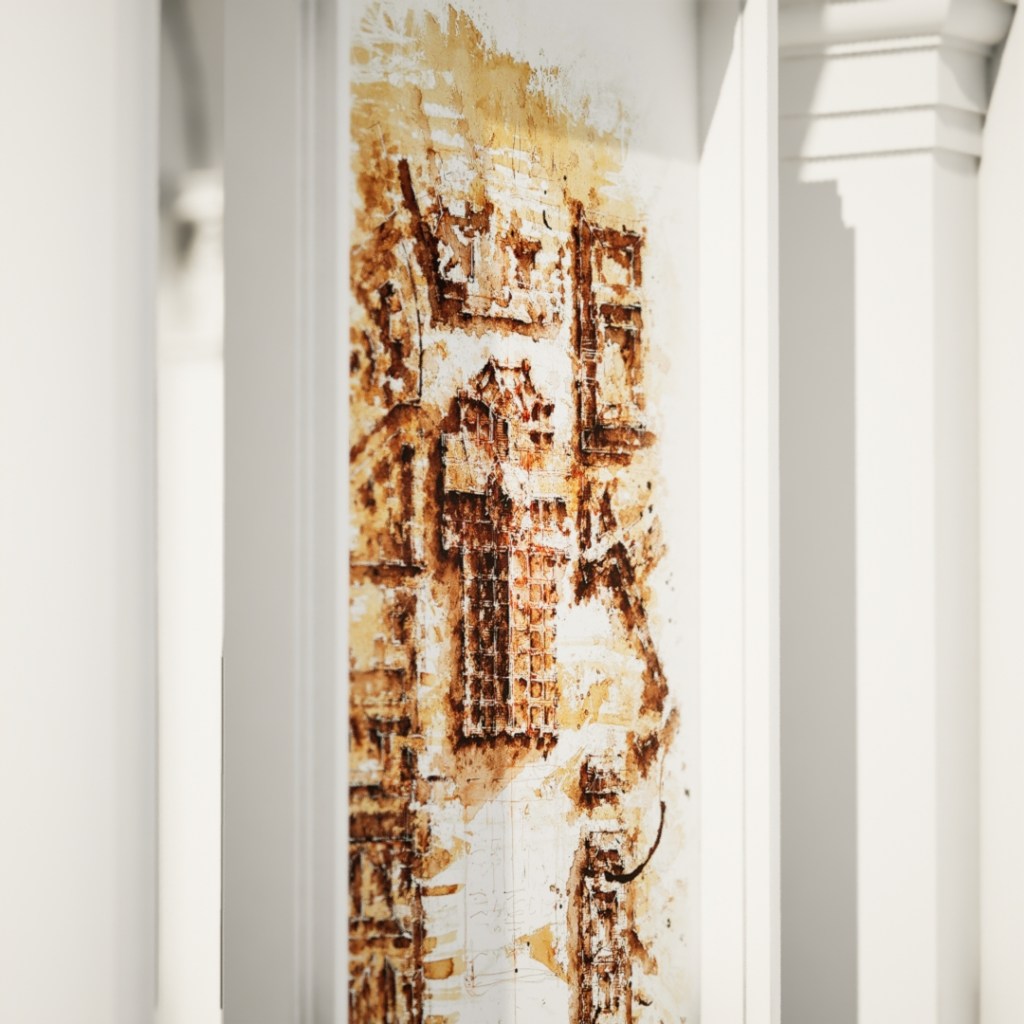
At first, it was just background. Then it became the center of gravity. His gaze kept returning to the traces of the Appian Way, the outline of the Forum, the threads of aqueducts. During tense negotiations over a 15-year development project, his eyes drifted toward it — and he suddenly paused: “How long did the Romans plan this aqueduct to last? A hundred years? Five hundred? A thousand? More? What did they KNOW about eternity that I’m still refusing to face?” His own project began to feel short-lived in contrast to this centuries-long strategy of intellect, stone, and will.
The painting became a mirror — not of strategy, but of paradox. Urban genius, infrastructure that outlived the empire… yet the Empire itself collapsed. They laid the foundation of Europe but failed to preserve it. The very institutions that shaped civilization couldn’t withstand their own expansion. The master plan embodied the boldness of practical vision across centuries — and the fragility of human systems. “Am I building a skeleton or just a façade? What will remain when my company fades into obscurity?” These questions now hung in the air of his office.
It wasn’t about “thinking a hundred years ahead.” It was a tectonic shift. Now, when evaluating a project, he asked: “Will this still function in 50, 100, 200 years?” And when he could dare to imagine adding “500” or even “1000” to that list — he felt a rare kind of happiness. Could the idea even hold that weight, even in theory? What systems was he embedding that might serve future generations? Would they stand the test of time — of politics, economics, disasters, and people?
He began investing in long-term frameworks, in architectural ensembles, resilient infrastructures, social fabrics — all the deep structures of true planning, built to outlive him. A strange kind of selflessness crept in — something he’d never felt before. The painting didn’t offer answers. It asked uncomfortable questions in the language of eternity, reminding him that true value doesn’t lie in square meters — but in the chance to leave behind stones that speak of your life’s work to generations ahead.
Some paintings decorate walls. Others — like this master plan — redraw the limits of thought, pushing us to build not just buildings, but our own chances at eternity.
Eduard Kichigin
🔥 Buy my big paintings. 🔥 Write to my manager Olga https://www.instagram.com/olgamoskvina.verde/
🔥 My very simple and very effective quick 🔥 drawing lessons http://patreon.com/kichigin
🔥 My NFT art 😃 Amazing drawing in 3D space https://rarible.com/Eduard_Kichigin
🔥 My store: 👕 clothes and accessories with my drawings. https://ink-and-pen-graphics-drawing.creator-spring.com/
 Eduard Kichigin Art English